


Microsoft’s LinkedIn Acquisition: Merging Tech Giants


When Microsoft announced its $26.2 billion acquisition of LinkedIn in 2016, many viewed it as an unexpected pairing between a software powerhouse and a professional networking platform. Yet, over time, the move proved to be one of the most strategic and profitable mergers in tech history.
This landmark acquisition not only expanded Microsoft’s reach into the professional world but also redefined the intersection of technology, networking, and business productivity. Today, the success of this merger offers a blueprint for how two very different tech ecosystems can unite to create unmatched value.
💼 The Background: Why Microsoft Bought LinkedIn
At the time of the acquisition, Microsoft was facing a strategic challenge—its traditional software business was shifting toward cloud services and enterprise connectivity. LinkedIn, on the other hand, had established itself as the world’s largest professional network, with over 430 million users and immense untapped data on global workforce trends.
The rationale was clear:
Combine Microsoft’s software ecosystem with LinkedIn’s professional graph to “connect the world’s professionals and make them more productive.”
For Microsoft, this was more than a purchase—it was a long-term play to deepen its influence in the professional landscape.
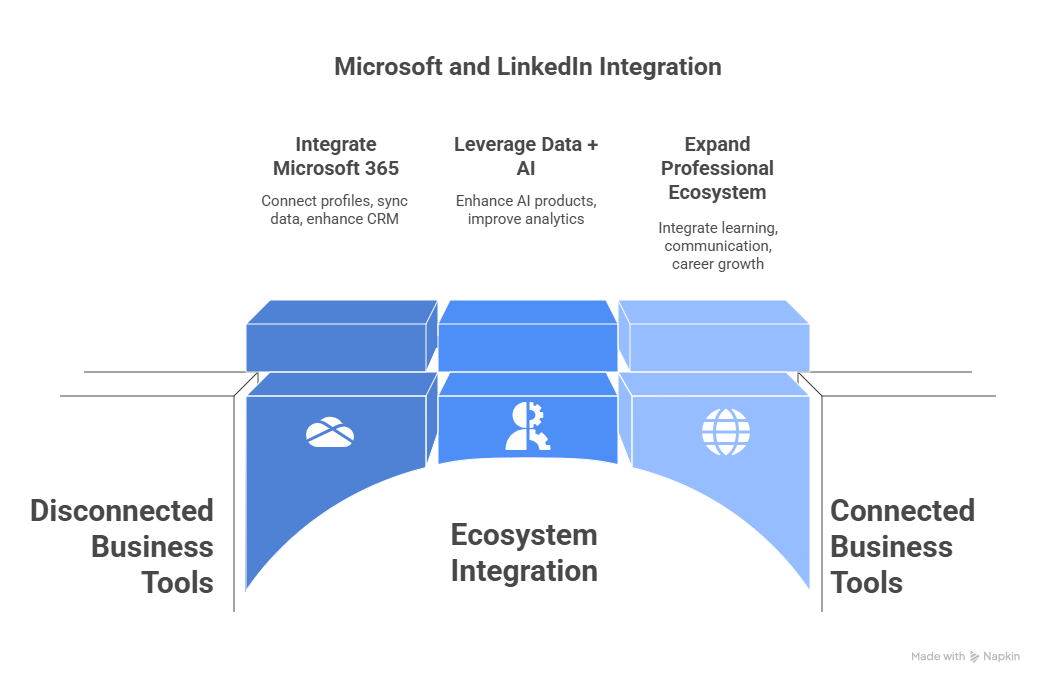
Microsoft and LinkedIn Integration
🧩 The Synergy: Technology Meets Networking
The real power of the merger came from integration, not acquisition. Microsoft didn’t just buy LinkedIn—it wove it into its ecosystem to create smarter, more connected business tools.
🔗 1. Integration with Microsoft 365
By connecting LinkedIn with Microsoft 365, users gained access to powerful features like:
-
Viewing LinkedIn profiles directly within Outlook and Office apps.
-
Syncing professional data for more personalized business communication.
-
Enhancing CRM capabilities with LinkedIn Sales Navigator inside Microsoft Dynamics 365.
This created a seamless bridge between productivity tools and professional insights.
🧠 2. Data + AI Intelligence
Microsoft leveraged LinkedIn’s vast dataset to enhance its AI-driven products, including predictive insights and talent analytics. This synergy improved tools like:
-
Microsoft Viva, the employee experience platform.
-
Azure’s AI capabilities for workforce and hiring analytics.
-
Power BI, offering richer insights into job markets and business performance.
🌍 3. Expanding the Professional Ecosystem
Together, the companies created an integrated environment for learning, communication, and career growth, merging:
-
LinkedIn Learning + Microsoft’s enterprise training initiatives.
-
Teams + LinkedIn for hybrid work and collaboration.
-
Shared advertising and marketing platforms to reach professional audiences.
📈 The Results: A Billion-Dollar Powerhouse
The acquisition paid off faster than expected.
-
LinkedIn’s revenue tripled, surpassing $15 billion in 2023.
-
Its user base grew from 430 million to over 950 million.
-
Microsoft gained a significant foothold in B2B marketing and talent solutions, making LinkedIn one of its most profitable divisions.
-
The collaboration strengthened Microsoft’s reputation as a leader in enterprise connectivity and productivity.
This merger demonstrated that data-driven networks and enterprise tools can thrive together when unified under a shared vision.
💡 Lessons from Microsoft’s Strategic Acquisition
✅ 1. Focus on Long-Term Synergy, Not Short-Term Wins
Microsoft’s patient approach to integration allowed both brands to grow without losing identity.
✅ 2. Let Culture Drive Success
Rather than imposing corporate control, Microsoft let LinkedIn maintain autonomy, ensuring innovation and agility.
✅ 3. Data Is the New Currency
The merger unlocked massive potential by combining LinkedIn’s professional graph with Microsoft’s AI and analytics tools.
✅ 4. Build Ecosystems, Not Silos
The future of tech lies in interconnectivity—this acquisition showed how seamless ecosystems enhance productivity and engagement.
🗣 Final Thoughts
Microsoft’s acquisition of LinkedIn wasn’t just about business—it was about building a connected professional world. By merging productivity software with social networking, Microsoft transformed LinkedIn into a data-rich hub that fuels insights, communication, and opportunity.
This merger stands as a testament to how strategic alignment, not just financial muscle, creates lasting impact in the tech world.
🚀 Want to Build Smarter Business Connections?
At Marketing By Ali, we help brands create meaningful partnerships, leverage data intelligently, and build digital ecosystems that grow revenue and trust.
👉 Contact us today to discuss how collaboration and strategy can transform your business growth.
We want to help take your firm to the next level. That starts with a conversation so we can understand your objectives, where you are currently, and where you want to be, and, working together, we can determine a plan and services that are right for you to make your business a success.
